 furl
furlDesk mobility guide
A practical approach to stretching after sitting all day
After a long period of sitting, the most useful first step is often simply changing position and moving gently. A short routine can help you take several joints through comfortable ranges without treating normal stiffness as a diagnosis.
By Altimova Studio LLC · Published July 1, 2026 · 6 minute read
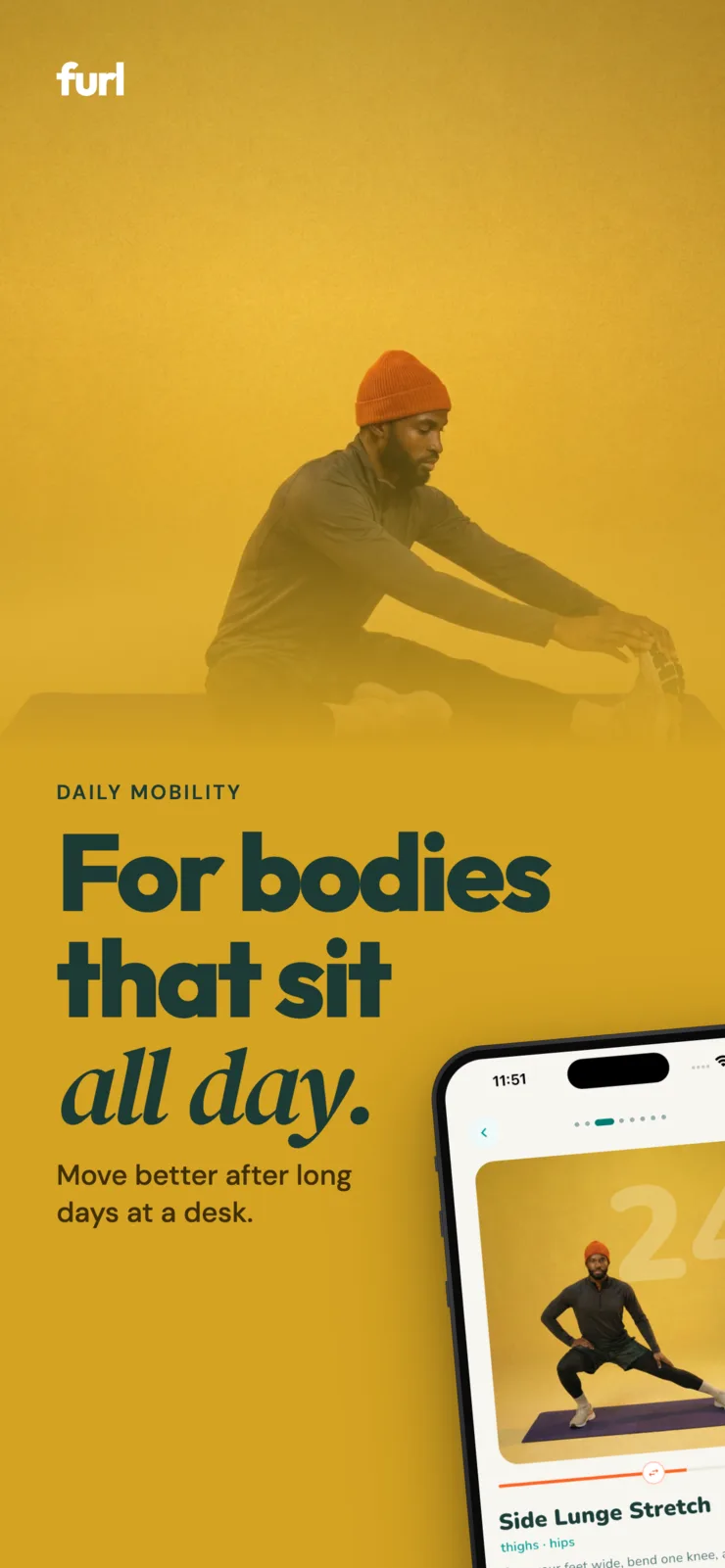
Start by changing position
Sitting is not a medical diagnosis, and there is no single posture that everyone must hold. The immediate goal after a long seated period can be simple: stand up safely, walk briefly if appropriate, and let your body move before settling into longer stretches.
Light movement also acts as a warm-up. Mayo Clinic advises warming up before deeper stretching and using smooth, gentle technique rather than bouncing or pushing into pain.
Choose areas based on your setup
Your routine should reflect what you were doing. Computer work may keep the wrists, elbows, neck, and shoulders in relatively similar positions. Sitting also keeps the hips and knees flexed for a long period, while the calves and ankles may move very little.
You do not need to target every area every time. Pick a few that feel relevant and use a balanced sequence when no one area stands out.
- Upper body: wrists, chest, shoulders, neck, and upper back.
- Lower body: hips, glutes, hamstrings, quads, calves, and ankles.
- Whole body: gentle standing or floor-based movements that change several joint positions.
Match the routine to the break
For a short work break, choose movements that require little setup and can be completed comfortably in the available space. Save a longer floor-based routine for a time and place where getting down and back up is practical.
A useful sequence can move from standing or seated positions into floor positions, or it can remain entirely standing. The best order is one you can follow without repeatedly rearranging your space.
Avoid treating every tight feeling the same way
A sensation of tightness does not always prove that a muscle is physically shortened. It can reflect position, fatigue, activity, stress, or other factors. Use the feeling as information, not a reason to force a deeper stretch.
If a particular movement repeatedly causes pain, numbness, dizziness, unusual weakness, or another concerning symptom, stop. Persistent or significant symptoms deserve evaluation by a qualified healthcare professional.
Make movement breaks easier to repeat
Keep a quick routine for busy days and a longer option for the end of the day. Attach the break to something visible, such as finishing a meeting or closing your laptop. Optional reminders can help until the cue becomes familiar.
Change the routine as your work changes. A day on a laptop in a small space may call for different target areas than a day spent driving, standing at a counter, or moving between locations.
Questions about this topic
Which areas should I stretch after desk work?
Common choices include wrists, neck, shoulders, chest, upper back, hips, glutes, hamstrings, and calves. Select areas based on your setup and what feels appropriate for you.
Should a desk stretching routine be standing or on the floor?
Either can work. Standing or seated movements are practical for short breaks, while floor-based movements may fit a longer session when you have suitable space.
Can Furl create a short routine after sitting?
Yes. Choose the time available, your target areas, experience level, and a general mobility or stiffness goal, then preview the routine before starting.